What historic architecture knew before Instagram

As a Chief Marketing Officer immersed in social media, I often think about architecture the way others think about algorithms. Angles. Light. Flow. Emotion. What makes someone stop scrolling, or in earlier centuries, stop walking and look up?
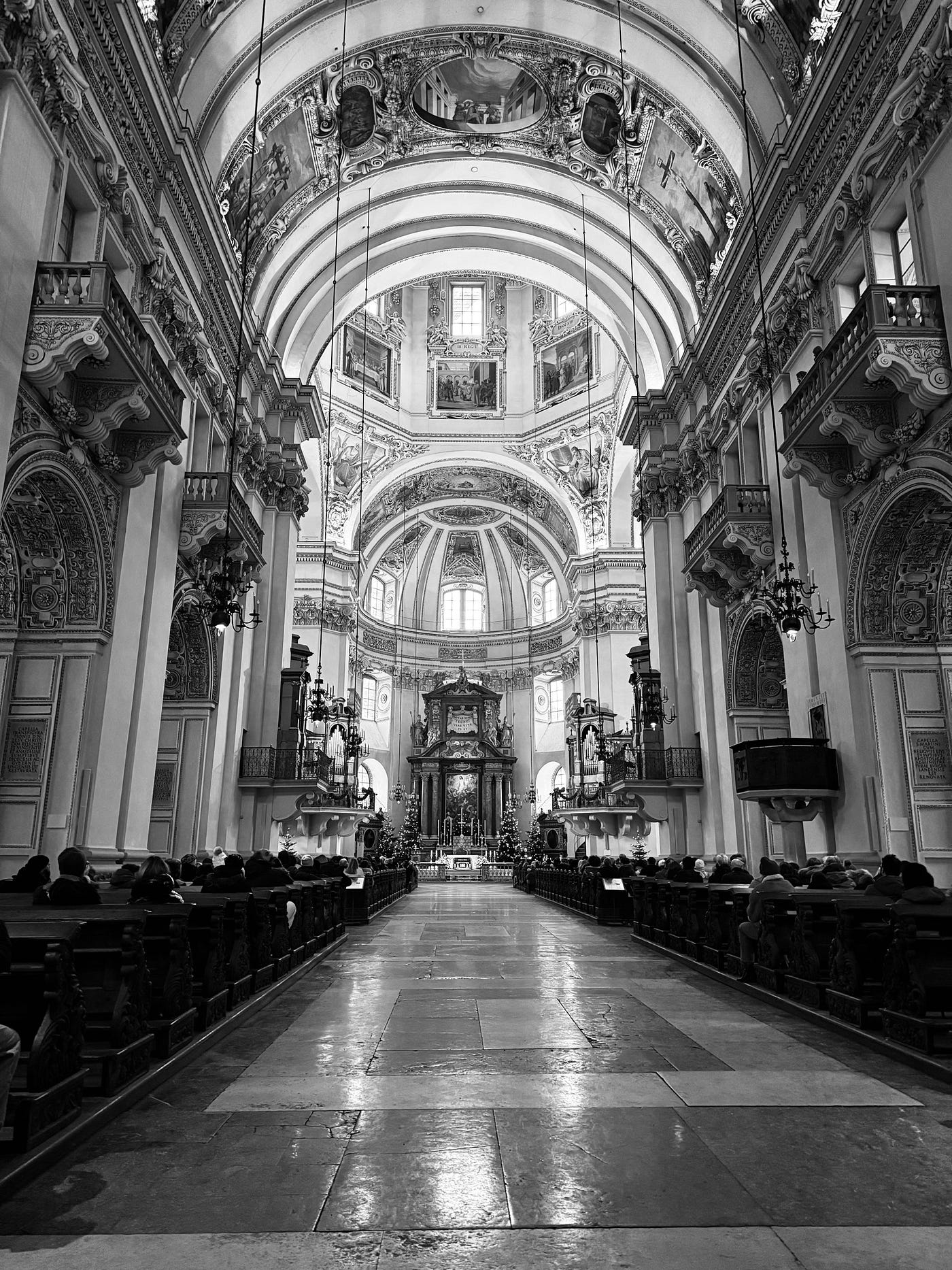
Travelling through Europe, one thought keeps returning: much of its architecture was designed for attention long before attention became a currency. Not just churches, but the homes of the wealthy, civic buildings, palaces, banks, and entire streetscapes. Towns were once their own states, each projecting power, faith, stability, and prosperity through stone. Architecture wasn’t merely functional; it was communicative. It told you who mattered here, what was valued, and where you stood within that hierarchy.

Churches mastered awe. Civic buildings mastered authority. Together, they formed a visual ecosystem designed to shape behaviour and belief. Narrow streets would open suddenly into grand squares. Modest façades would give way to opulence. The experience was choreographed. Movement slowed. Eyes lifted. Presence was felt before it was understood. From a marketing lens, this is remarkably sophisticated.

Today, we speak about brand touch points and user journeys. Then, they designed entire cities as narratives. Perspective lines drew the eye forward. Symmetry suggested order. Scale implied power. Light softened dominance into beauty. These weren’t aesthetic choices alone; they were psychological ones.

Social media uses the same language. Wide shots to convey freedom. Low angles to signal importance. Clean lines to suggest control. We curate feeds the way cities once curated streets — highlighting aspiration, success, and belonging while quietly editing out the mundane. What’s particularly striking is contrast.

Historic architecture existed alongside humble living. The visual difference was intentional. Grandeur only works when framed against the ordinary. Instagram functions the same way. A polished image interrupts daily life, offering a moment of elevation, much like stepping from a cobblestone street into a palazzo or cathedral.
The difference is ritual.

Architecture once held people in place. You entered, paused, absorbed. Social media asks us to move on. The feeling is brief, the meaning fragmented. We inherit the visual language of power and beauty, but without the time, or silence to fully experience it.
And yet, the impulse remains unchanged. Humans are still moved by scale, light, and proportion. We still respond emotionally before intellectually. The built environment taught us how to feel long before we learned how to scroll.
Which brings me, somewhat ironically, to my present moment.

Standing in front of a centuries-old building with stone worn smooth by history, I noticed a Porsche perfectly framed against it. A modern symbol of wealth, parked neatly in front of an old one. Same impulse. Different materials.
Turns out, the architecture didn’t need Instagram after all. It just needed a good backdrop.


Comments
Post a Comment